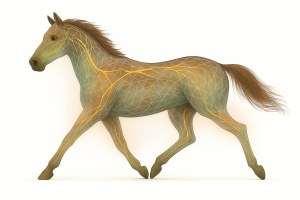
Beneath what we see when w//e evaluate a horse – muscle, fat, topline, symmetry – lies a system that influences every stride, load, and moment of comfort or tension: fascia.
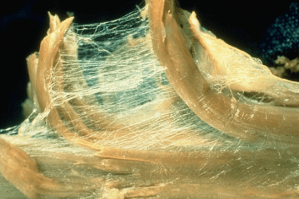
Fascia is a network of tough connective tissue that creates a 3-dimensional web extending without interruption from head to toe. Fascia is the connective tissue that links every tissue in the body. It connects the skin to the muscle, the muscle to the bone and the organs to each other. Fascia plays a vital role in movement and overall health. When healthy, fascia is flexible and hydrated. However, if it becomes restricted due to injury, repetitive stress, or emotional tension, it can lead to pain, poor posture, and reduced mobility. Understanding myofascial lines helps explain how a problem in one area can affect the entire body.
Fascial quality depends on nutrition, workload, hydration, and metabolic health. This means a horse’s overall body condition directly influences the health of the fascial web. When fascia glides and communicates, movement in the horse is effortless. When dehydrated or restricted, everything tightens.
- Fascia is composed of collagen and elastin fibers, with a gelatinous “ground substance” that transports nutrients. It surrounds and separates every muscle fiber, bone, and organ.
- It transmits force, coordinates movement, protects tissues, and helps fluids circulate throughout the body.
- These are interconnected chains of muscle and fascia that work together as a unit. The movement and function of one line can influence others, meaning a restriction in one part of the body can cause problems elsewhere.
- When restricted, fascia can impede blood and lymphatic circulation, affect nerve function, and lead to muscle imbalances, poor posture, decreased strength, and reduced endurance.
The benefits of equine myofascial massage include:
- increased range of motion and flexibility
- improved circulation
- pain and stress relief
- faster recovery
- enhanced performance
Releasing tension in the fascia helps restore balance, improve posture, prevent injuries, and increase overall well-being for the horse.

